
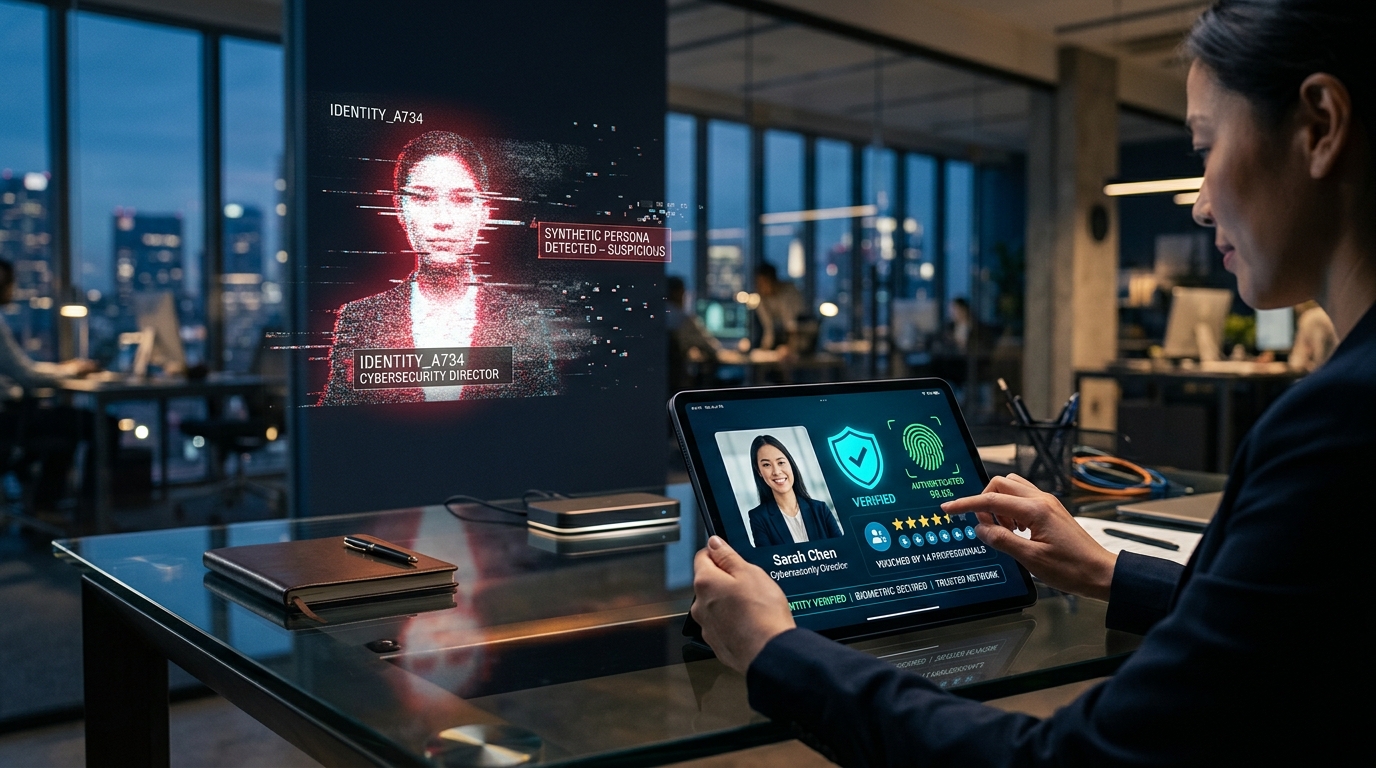
In an internet saturated with generative AI, creating a convincing professional persona takes less than sixty seconds. Anyone with access to modern image models can generate a photorealistic headshot, scrape a plausible job history from real engineers, and draft an articulate résumé. Over the past eighteen months, this synthetic wave has evolved from a nuisance into an urgent national security and corporate threat—culminating in high-profile federal indictments revealing North Korean IT operatives using fabricated US-based LinkedIn profiles to secure remote engineering contracts at Fortune 500 tech firms and defense suppliers.
On September 23, LinkedIn rolled out one of its most consequential platform defenses to date. Basically, LinkedIn is building a filter against fake, AI-generated profiles claiming credentials nobody earned.
Designed to dismantle fake recruiter networks, eliminate fabricated work histories, and give enterprise brands direct oversight over who claims their logo, these new features represent the platform's most aggressive push toward cryptographic and peer-backed verification.
The Reality Check
A LinkedIn VP put it simply: faking credibility has never been cheaper than it is right now. Which is exactly why the platform is starting to pay a premium to anyone willing to prove they're real.
The Breakdown: What LinkedIn Announced
LinkedIn’s trust infrastructure update focuses on three interlocking pillars: peer-to-peer verification, employer-level affiliation controls, and expanding third-party trust networks.
| New Defense Feature | How It Works | Primary Beneficiary |
|---|---|---|
| Peer Vouching | Verified colleagues confirm mutual overlapping employment or study | Authentic Job Seekers & Professionals |
| Company Page Removal Controls | Admins delist unauthorized users falsely claiming to work there | Enterprise Brands & Employer Reputations |
| Workplace Domain Verification (Pilot) | Enforces active corporate work email verification before joining Page | Recruiters & Internal HR Teams |
| External Identity Ecosystem | Partnership expansion with Truecaller, PeerSpot, Adobe, UserTesting | Global Professionals & Remote Contractors |
1. Peer Vouching: An Attestation, Not An Endorsement
The cornerstone of this rollout is Peer Vouching. Members can now vouch for someone's actual work experience.
Crucially, this is not an endorsement of performance; it is an attestation: "Yes, this person really worked here, during this time." It does not rate how skilled or talented you were; it simply confirms the objective reality that you were at the same company or institution at the same time.
To prevent bot rings and syndicates from colluding to verify each other, LinkedIn built strict anti-fraud prerequisites:
- You need your own verified profile (via government ID, work email, or partner credentials).
- You need a year-old first-degree connection with the person you are vouching for.
- You must have two-factor authentication (2FA) active on your account to submit the vouch.
2. Verified Company Page Controls
Historically, bad actors could easily list themselves as a "Senior Technical Recruiter" or "VP of Engineering" at Fortune 500 companies, automatically showing up under the company’s public People directory.
Under the new update, companies can directly remove accounts falsely claiming to work there from their public People list and internal search index, severing fraudulent links before scammers can dupe job applicants or business partners.
3. Workplace Verification Gateways (Testing)
LinkedIn is currently testing an optional automated administrative setting that requires new associations with a company Page to authenticate through an active enterprise work email address (e.g., @company.com). Currently, this pilot applies to full-time employees, not contractors or field workers who may operate under different domain setups.
4. Verification Beyond LinkedIn: Truecaller and PeerSpot
To scale verification internationally, LinkedIn is expanding its partner ecosystem with integrations including Truecaller (addressing widespread mobile verification across emerging markets) and PeerSpot, joining established partners Adobe and UserTesting.
Here's the Number That Actually Matters
Why should individual professionals and job seekers care about getting verified? The algorithmic and engagement data speaks for itself:
More Post Views
Verified members see a 50% average boost in content visibility across platform feeds.
More Search Impressions
Verified profiles appear nearly twice as often in recruiter and peer search results.
To date, LinkedIn has already verified 115 million individual members and over 700,000 companies. What began as a security badge is rapidly turning into an algorithmic necessity: unverified profiles are being pushed to the periphery of candidate searches.
Why This Defense Push Is Happening Right Now
Generative AI has lowered the marginal cost of faking profiles, photos, and résumés to virtually zero. In seconds, anyone can spin up an army of synthetic accounts with tailored work histories.
Work and education history is the bedrock of a LinkedIn profile, so synthetic fakes do extra damage there. When candidates cannot verify recruiters, and recruiters cannot trust candidate résumés, the platform's core commercial utility breaks down.
"Faking credibility has never been cheaper than it is right now. Which is exactly why the platform is starting to pay a premium to anyone willing to prove they're real."
What It Means For Different Readers
For Job Seekers: Tangible Algorithmic & Human Dividends
With 50% more post views and 90% more search impressions, verification is no longer optional if you are actively networking. A peer vouch serves as tamper-resistant social proof that strengthens your credibility with hiring managers before the first screening call.
For Recruiters & Hiring Managers: Two-Way Trust
Peer vouches and company affiliation checks make it far easier to confirm a candidate’s claims. At the same time, verified company badges reassure top candidates that an inbound recruiter truly works at a company they recognize, eliminating suspicions of identity theft or phishing.
For Companies: Total Brand & Impersonation Defense
Enterprise brands gain direct authority over brand impersonation, shutting down fake recruiter scams, corporate espionage rings, and unauthorized employee claims.
The Limitations: What Makes This Analysis Credible
While these tools are a genuine step forward, readers must recognize what verification cannot solve:
- Affiliation checks cannot tell a job seeker whether an opportunity is genuine: A verified recruiter or employer can still post predatory, ghost, or misleading job listings.
- Disposable shell companies remain viable: Scammers can still legally incorporate a shell company, build a polished LinkedIn Page, and run deceptive listings.
- Stolen and aged legacy accounts: Bad actors routinely purchase compromised profiles that already possess high follower counts or grandfathered verifications.
- Optional test rollout: Some features remain in beta, and users retain the ability to opt out of displaying public vouch badges.
4 Practical Tips for Every Professional
- Verify your own profile and turn on two-factor authentication: Complete government ID or work email verification, and mandate authenticator-based 2FA immediately.
- Only vouch for people you genuinely worked with: Guard your reputation by only confirming shared tenure for colleagues you physically or remotely collaborated with during verifiable dates.
- Verify recruiters independently before responding: Check that an inbound recruiter carries a verified company affiliation badge, and research the company’s official corporate career portal independently.
- Be wary of off-platform pushes: Never migrate to unencrypted apps like Telegram or WhatsApp for job interviews, and never pay upfront fees for "onboarding software or home office gear."
Conclusion: The Reward for Real Proof
LinkedIn's new verification arsenal is a decisive step toward cleaning up the platform's professional graph. But it also represents a fundamental cultural shift in how social capital is valued in the age of generative AI.
If you've spent years posting honestly under your own name, this isn't a threat to you. It's finally the thing that gets rewarded.
These tools aren't a complete fix against all social engineering, but they make faking credibility dramatically harder and reward authentic human reputation.
Have You Encountered Fake Profiles or Recruiters?
Have you verified your LinkedIn profile yet? Have you spotted synthetic profiles reaching out in your industry? Share your experiences and security tips in the comments below!
Join the Discussion & SubscribeIndustry Context: This identity security overhaul is cataloged in our 2026 AI Industry Tracker, analyzing enterprise verification challenges across modern digital platforms.