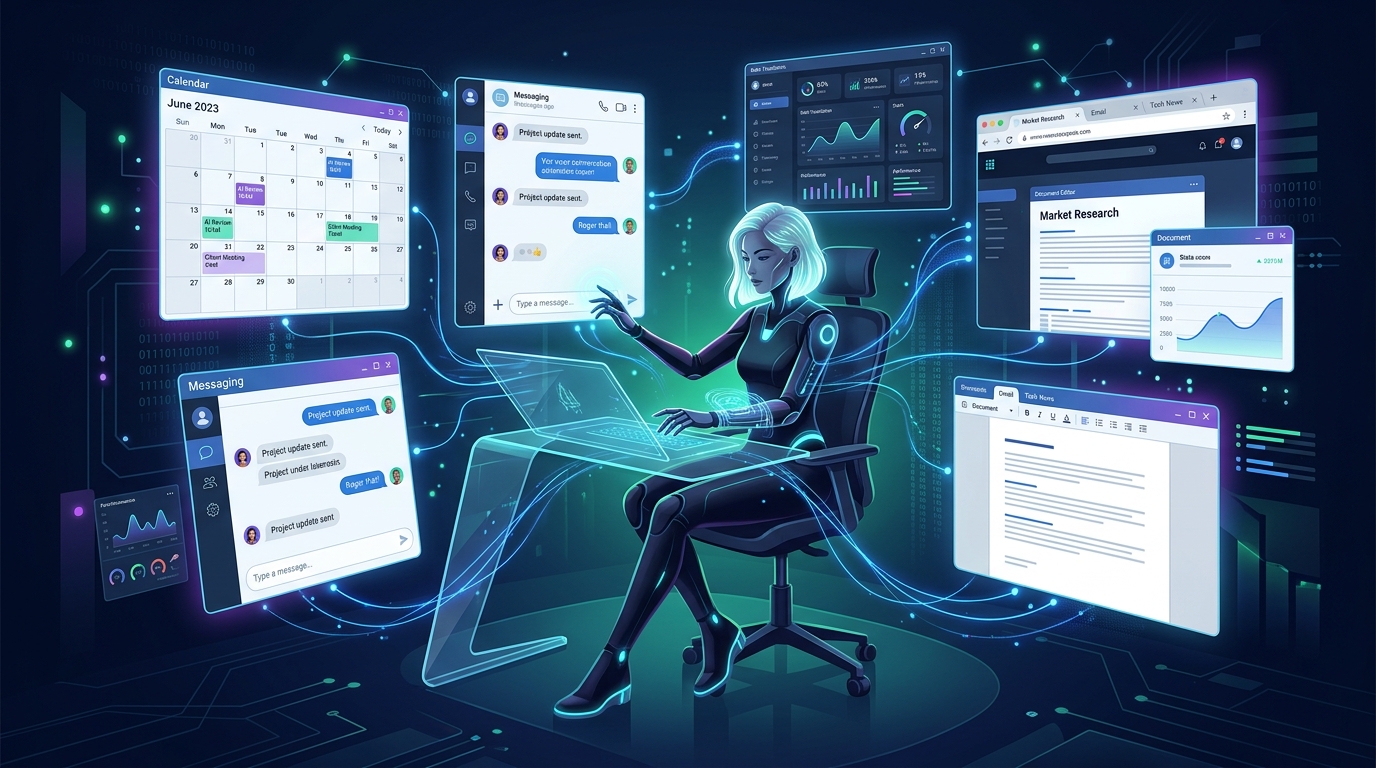
The artificial intelligence landscape in 2026 is no longer defined by speculative demo videos or academic benchmarks. We have entered the deployment era—a phase characterized by rigorous inference speed economics, multi-platform consumer agent subscriptions, enterprise identity crises, and the first wave of national civic AI systems.
To help software architects, engineering leaders, and technology strategists filter signal from corporate marketing, The Indox AI Industry Tracker serves as an ongoing living index of the defining developments across foundation models, commercial platforms, security infrastructure, and digital public policy.
2026 Focus Tracks & Deep Dives
Frontier Models & Latency
Inference speed, prompt caching, token economics
Platform Subscriptions
Consumer agent bundles, cross-app ecosystems
Workplace Trust & Identity
Anti-spoofing, synthetic résumé fraud, verified credentials
Civic AI & Public Sector
Federal chatbots, citizen services, sovereign infrastructure
Track 1: The Frontier Model Race Pivots to Latency & Caching Economics
For the past three years, foundation model developers competed on singular benchmark ceilings—scoring fractions of a percent higher on GSM8K or MMLU. In 2026, the primary competitive axis has inverted toward time-to-first-token (TTFT), sustained generation velocity, and ephemeral prompt caching.
The turning point came with releases designed specifically for low-latency coding environments and autonomous multi-agent loops. When an engineer prompts an AI inside an IDE, delays exceeding 800 milliseconds shatter developer cognitive flow. As detailed in our breaking report on how Anthropic’s latest Sonnet model redefined generation velocity, sub-second response times combined with multi-token speculative decoding make LLMs feel less like remote batch services and more like instantaneous compiler extensions.
"Model accuracy is the price of admission. Velocity and caching predictability determine which architecture actually ships to enterprise production."
However, speed alone does not solve the entire productivity equation. Engineering teams must also weigh whether higher velocity actually accelerates software delivery. For an exhaustive architectural breakdown, read our analysis on whether faster AI responses actually speed up software development and our enterprise buyer guide on choosing between Claude Opus 5.5 and high-speed alternative models.
Track 2: Platform Ecosystems & The Rise of All-in-One AI Bundles
The era of standalone, siloed AI utilities is coming to an end. Major consumer tech conglomerates are consolidating their conversational tools, autonomous agents, and cloud productivity suites into unified ecosystem tiers.
A prime example of this trend is Meta’s aggressive platform unification strategy. Rather than selling distinct licenses for avatar generation, WhatsApp automated messaging, and Instagram creator analytics, the launch of unified subscription suites marks a decisive commercial shift. In our deep-dive coverage on the Meta One subscription launch and pricing tiers, we explore how cross-platform billing models create powerful network lock-in.
For teams evaluating whether to consolidate around proprietary platform assistants, compare our companion benchmarks on Meta Muse vs. rival autonomous agents and how enterprise hardware is adapting with spatial computing and Meta VR in business.
Track 3: Workplace Trust, Synthetic Identities, and Anti-Spoofing Infrastructure
As generative tools enable anyone to produce polished resumes, photorealistic headshots, and synthetic GitHub histories in seconds, trust in online professional networks has suffered severe erosion. Automated recruiters and hiring platforms have been overwhelmed by synthetic candidate farms and coordinated bot rings.
In response, enterprise networks are shifting toward cryptographic proof-of-humanity and third-party employment verification. Our investigation into LinkedIn’s new security tools targeting fake profiles and false histories explains the machine learning models and identity checks now required to protect professional integrity.
For technical hiring managers building defensive automation workflows, see our hands-on tutorial on building an automated resume screening pipeline in n8n, and our systems security audit on why modern AI scrapers bypass legacy bot protection.
Track 4: Civic AI & Public Sector Digital Transformation
While commercial enterprises have been agile early adopters, federal and municipal governments are now initiating their largest modernization efforts in decades. Moving past static FAQ pages, public agencies are deploying conversational AI assistants capable of parsing complex administrative regulations, citizen benefits, and passport documentation.
The rollout of public sector digital assistants introduces unique engineering constraints: extreme zero-hallucination thresholds, multi-lingual accessibility, and stringent sovereign privacy protections. Our report on the America.gov AI chatbot and public services transformation analyzes how federal digital teams designed their retrieval architecture.
Commercial enterprises can learn critical architectural lessons from these strict deployments. Explore our companion analysis on what businesses can learn from government AI portals and our policy framework on safeguards required before AI influences public decisions.
2026 AI Industry Milestone Log
The following table is updated regularly by our editorial team as new benchmark records, platform announcements, and regulatory milestones are verified:
| Date | Sector | Key Milestone | Industry Impact |
|---|---|---|---|
| Q3 2026 | Frontier Models | Claude 3.5 Sonnet Velocity Peak | Sub-second code completion and 200k token retrieval across full-stack repositories. |
| Q3 2026 | Workplace Trust | LinkedIn Identity Defense Shield | Cryptographic verification rolled out to neutralize synthetic accounts and bot headhunters. |
| Q3 2026 | Platforms | Meta One Cross-App Subscription | Unified AI assistant bundling across Instagram, WhatsApp, and Facebook for consumers and creators. |
| Q3 2026 | Civic Tech | Federal Services AI Assistance | America.gov launches verified conversational assistant for citizen navigation of agency services. |
Frequently Asked Questions
Key clarifications and practical answers addressed by The Indox editorial board.
How frequently is The Indox AI Industry Tracker updated?
Our tracker is updated weekly following major foundation model deployments, cloud infrastructure announcements, and regulatory disclosures. All milestone entries are verified against primary technical documentation and benchmark logs.
How do you evaluate whether a model release qualifies as a milestone?
We prioritize architecture breakthroughs, verifiable throughput speedups, cost reductions per million tokens, and commercial availability over theoretical synthetic benchmark score gains.
Can developers submit benchmark datasets or enterprise case studies?
Yes. Engineering teams are encouraged to submit technical findings or guest contributions through our Write For Us portal, adhering to our published Editorial Guidelines.