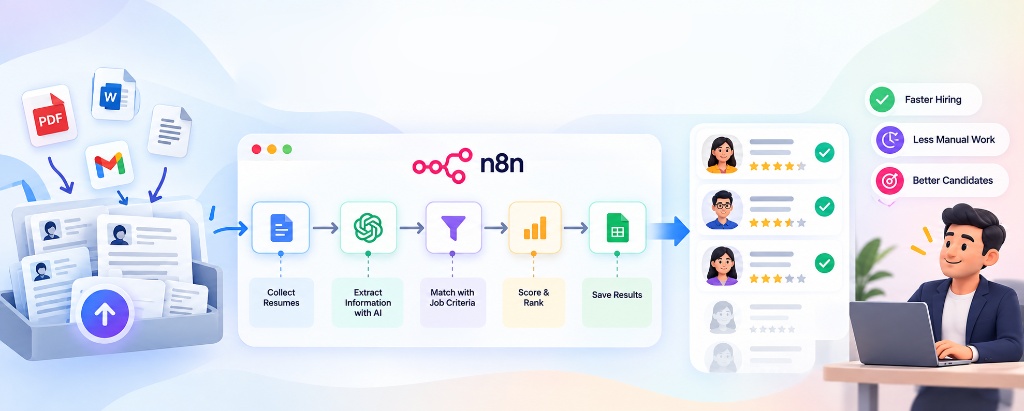


There is a seductive fantasy in modern operations engineering: spend a weekend connecting a dozen SaaS apps through Zapier or Make, and your business will run autonomously while you sip coffee. But for anyone who has lived with production no-code pipelines for more than three months, Monday mornings look very different: expired OAuth tokens, silent webhook dropouts, malformed payload exceptions, and customer records overwritten by accidental recursive loops. Automation is not free time; it is a trade of physical manual labor for ongoing systems maintenance.
The Automation ROI Equation
Before writing a single webhook or chaining a workflow block, engineers should calculate the Net Automation Return (NAR):
Where:
- Tsaved: Minutes saved per task occurrence.
- F: Frequency of the task over a 12-month horizon.
- Tbuild: Initial engineering hours required to build and test the flow.
- Tmaintenance: Hours spent updating API versions, fixing broken connectors, and refreshing security tokens.
- Tfailure: The catastrophic cost of debugging and remediating silent failures when data goes missing.
When you apply this math honestly, you quickly discover that automating a task that takes 2 minutes once a week requires over two years just to break even on the 6 hours it takes to build, test, and maintain the automation.
| Automation Category | Fragility Rating | Typical Maintenance | Failure Blast Radius | Net ROI Verdict |
|---|---|---|---|---|
| Invoice Reconciliation & OCR | Low (Structured APIs) | ~30 mins / quarter | Low (isolated to accounting) | Massive (>15x Return) |
| Automated Backup Verification | Low (Deterministic Cron) | ~15 mins / quarter | Zero (Read-only restore) | Essential (>20x Return) |
| Form-to-Slack Lead Routing | Moderate | ~1 hr / month | Moderate (delayed sales response) | Positive (~3x Return) |
| Bidirectional CRM Synchronization | Extreme (Race conditions) | ~8-12 hrs / month | Catastrophic (corrupted customer DB) | Negative (Net Time Sink) |
| Scraping Without Public APIs | High (DOM churn) | ~4-6 hrs / month | High (silent pipeline starvation) | Negative (Buy an API instead) |
The Three Automations That Quietly Waste Your Life
1. The Bidirectional Two-Way CRM Sync
Attempting to synchronize contact records continuously between two stateful databases (e.g., Salesforce and Notion, or HubSpot and Airtable) via third-party webhooks is an architectural nightmare. Without distributed transaction locks, updates in App A trigger webhooks in App B, which in turn reflect back to App A. Within hours, your Zapier bill spikes, records overwrite each other with stale timestamps, and engineers spend days unpicking corrupted data.
2. Over-Engineered Multi-Platform Social Schedulers
Founders often spend 12 hours configuring Zapier to automatically crosspost every blog RSS update to X, LinkedIn, Threads, and Bluesky with customized image resizing. Because social media APIs frequently deprecate formatting requirements or throttle rate limits, these automations break continually. Manually opening four tabs and pasting the post with tailored platform-native context takes 3 minutes and yields 5x higher engagement.
3. Brittle Web Scraping for Dynamic Sites
Automations that rely on headless browsers parsing non-API web pages to gather competitor pricing or vendor data break whenever the target website updates a CSS class or introduces a Cloudflare turnstile. If data isn't exposed through a signed webhook or documented REST endpoint, paying $29/mo for an official data provider is infinitely cheaper than paying an engineer to fix broken XPath selectors twice a week.
The Engineering Gold Standard: Idempotent Webhooks
When automation is genuinely warranted, the difference between an amateur setup and an enterprise-grade pipeline comes down to one technical property: idempotency.
Webhooks can—and will—be retried by sending services during network hiccups. If your automation charges a credit card, increments an inventory counter, or sends a welcome email, processing a duplicate webhook will create duplicate charges or spam customers.
Below is a production-tested Python FastAPI pattern demonstrating cryptographic payload verification and atomic Redis deduplication:
from fastapi import FastAPI, Request, HTTPException, Header
import hmac
import hashlib
import redis

app = FastAPI()
# Redis connection with 24-hour key TTL for deduplication
r = redis.Redis(host='localhost', port=6379, db=0, decode_responses=True)
WEBHOOK_SECRET = "whsec_prod_sample_key_92817"

@app.post("/api/v1/stripe-webhook")
async def handle_stripe_webhook(
    request: Request,
    stripe_signature: str = Header(...)
):
    body_bytes = await request.body()

    # 1. Cryptographic HMAC Verification
    computed_sig = hmac.new(
        WEBHOOK_SECRET.encode('utf-8'),
        body_bytes,
        hashlib.sha256
    ).hexdigest()

    if not hmac.compare_digest(computed_sig, stripe_signature):
        raise HTTPException(status_code=400, detail="Invalid HMAC signature")

    payload = await request.json()
    event_id = payload.get("id")

    # 2. Atomic Idempotency Check via Redis SETNX
    # Returns 1 if key was freshly set, 0 if it already existed
    is_new_event = r.set(f"webhook:event:{event_id}", "processed", nx=True, ex=86400)

    if not is_new_event:
        # Already processed! Return 200 OK immediately so provider stops retrying
        return {"status": "ignored", "reason": "duplicate_event_already_processed"}

    # 3. Execute business logic safely exactly once
    process_payment_receipt(payload["data"]["object"])
    return {"status": "success", "event_id": event_id}

def process_payment_receipt(data):
    # Safe, isolated side-effects
    print(f"Recorded transaction for customer: {data.get('customer')}")
"Never automate a process you haven't performed manually at least fifty times. If you don't understand the edge cases with your own hands, you are merely automating the generation of chaos."
Resilience Architecture: Exponential Backoff & Circuit Breakers
When an external API (like Slack, Shopify, or Salesforce) experiences downtime, naive automation scripts will hammer the third-party endpoint repeatedly until their IP is blocked or rate-limited.
Durable automations implement truncated exponential backoff with jitter. Instead of retrying immediately, the client waits an exponentially increasing interval plus random noise (e.g., 2s, 4s, 8s, 16s ± 500ms) before retrying.
Furthermore, if downstream failures exceed a critical threshold (e.g., 5 consecutive HTTP 500 errors), an automated circuit breaker should trip into an "Open" state. Rather than wasting server resources attempting doomed requests, incoming payloads are routed straight into a persistent dead-letter queue (DLQ) in Amazon SQS or RabbitMQ. Once the downstream healthcheck recovers, the queue drains safely without data loss.
The 4 Principles of Durable Automation
- Unidirectional Data Flow: App A writes to App B. App B never writes back to App A. Establish an absolute, single source of truth for every database entity.
- Fail Loudly, Never Silently: Every automated failure must ping a monitored triage channel (such as a private Slack
#alerts-opschannel) with the full JSON payload. A broken automation that hides its failure for two weeks can bankrupt a startup. - Scheduled Healthchecks: Use dead-man snitches (such as Healthchecks.io). If your nightly synchronization script fails to ping the monitoring endpoint by 04:00 UTC, trigger an on-call escalation.
- Code Over Connectors for Core Logic: If an automation handles customer revenue or primary authentication, write it as a tested microservice in Python or Node.js with automated test suites rather than a chain of 14 visual Zapier blocks.
Frequently Asked Questions
Key clarifications and practical answers addressed by The Indox editorial board.
Is self-hosted n8n better than Zapier for enterprise teams?
Yes, provided you have internal DevOps capability. n8n offers transparent Git-versioned workflows, local execution inside your private VPC, and predictable flat-rate self-hosted pricing, eliminating the exorbitant per-execution fees charged by Zapier at high volume.
How should I store secrets and API tokens across automation platforms?
Never hardcode production API tokens directly in webhook URLs or script bodies. Use dedicated secret managers (like AWS Secrets Manager, Doppler, or HashiCorp Vault) and grant automation service accounts least-privilege scoped permissions.
What is the single best automation for a solo founder or small team?
Automated customer onboarding and billing reconciliation via Stripe webhooks. Handling customer creation, welcome emails, and provisioning access automatically saves hundreds of hours while delivering instant gratification to paying users.
Final Takeaway
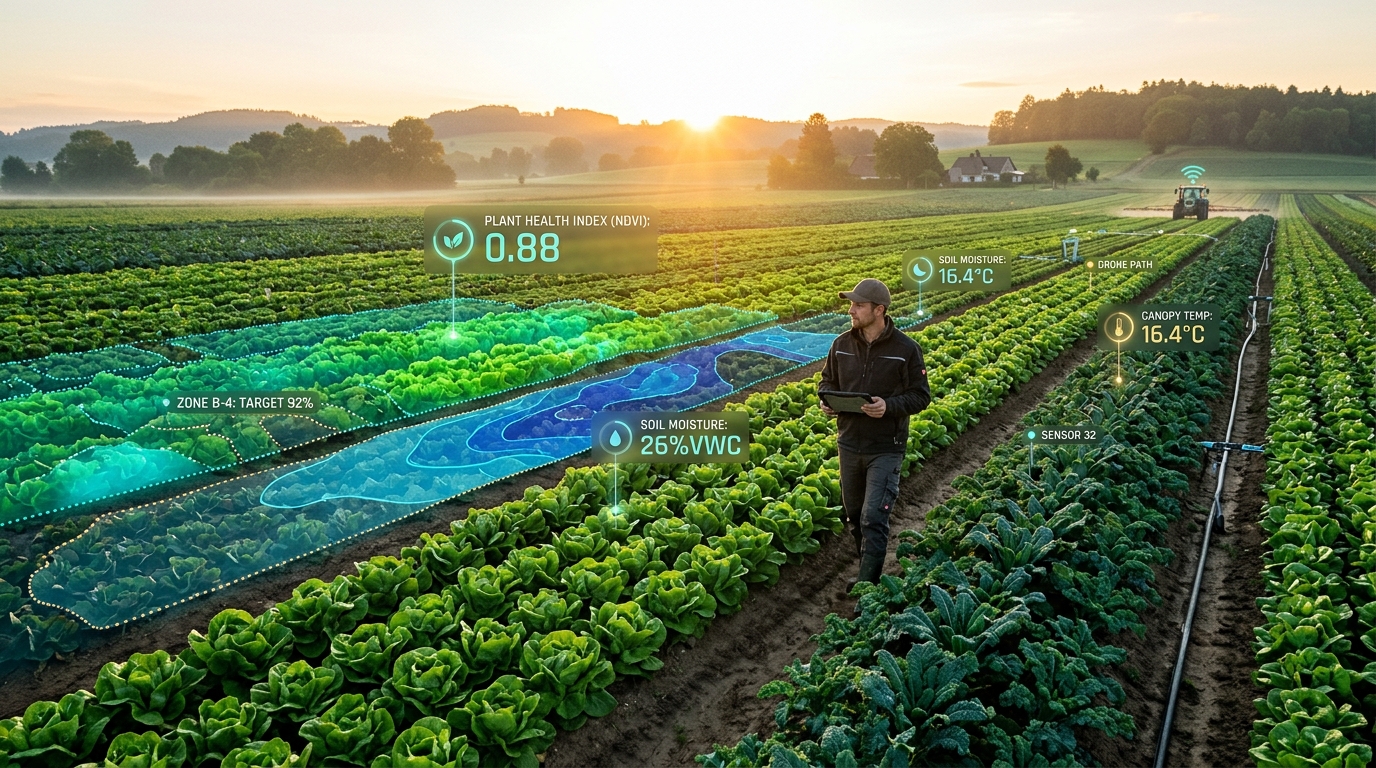
Automation is a force multiplier, but a multiplier works equally on positive and negative numbers. If you automate a clean, well-understood, high-frequency process—such as real-time computer vision weed control in production agricultural AI—you gain immense leverage. If you automate a messy, poorly scoped workflow, you merely multiply the speed at which errors accumulate. Choose your battles wisely.
Master Architecture: Avoiding fragile automation debt is analyzed in depth in our 2026 AI Workflow Automation Guide, featuring production blueprints for self-hosted orchestration and schema contracts.