
It is a scenario every smartphone owner knows intimately: you pick up your phone simply to check tomorrow's weather forecast or verify what time your flight boards. But the moment your screen unlocks, a badge of three unread notifications catches your eye. Twenty minutes later, you are mindlessly scrolling through an algorithmic feed, completely having forgotten what you picked up your device to do in the first place.
Hardware makers believe they have found the antidote: wearable AI.
The pitch sounds intoxicating: by offloading quick micro-tasks—like asking a question, setting a timer, or translating a menu—to an always-available voice assistant or smart glasses, you can finally keep your smartphone tucked away in your pocket.
Which brings us to the core question: Can wearable AI actually reduce the time you spend staring at your phone?
The Bottom Line
"Wearable AI makes quick, hands-free tasks easier to accomplish without unlocking a phone—but there is zero empirical proof it actually cuts total screen time. Habits matter far more than hardware, and adding a second gadget often increases your total AI consumption."
Meta's Fresh Hardware Wave: Muse Charm & Camera-Free Glasses
The newest and most aggressive push into ambient AI hardware comes from Meta. At its recent Meta Connect gathering, the company unveiled a twin-track hardware strategy built around its Meta Muse assistant:
Meta Muse Charm
A tiny, puck-shaped wearable gadget equipped with a miniature glanceable display and microphone. Designed to clip onto a keychain, lapel, or bag, Mark Zuckerberg described the Charm as the fastest way to interact with Muse if you aren't wearing glasses.
Target: Late 2026 release (Price TBD)Audio-Only Smart Glasses
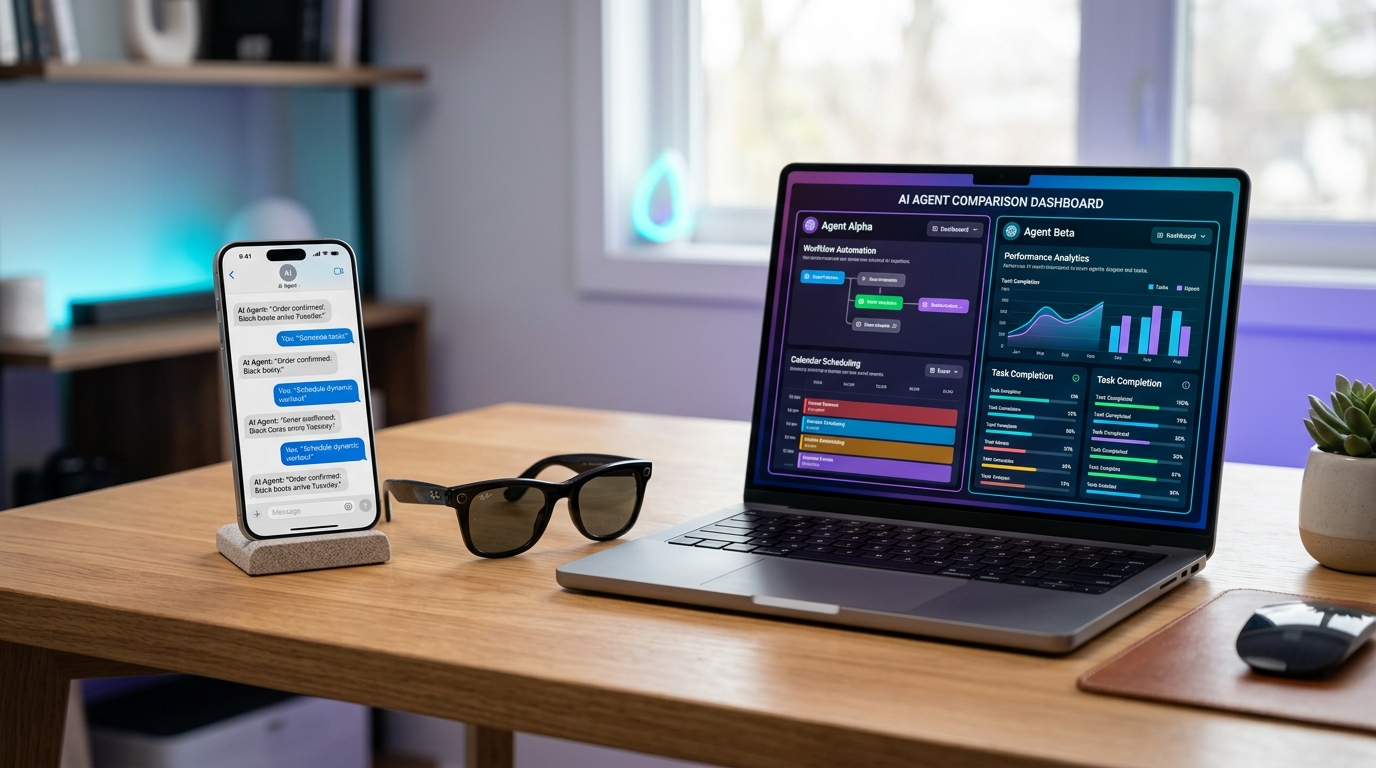
A streamlined pair of smart frames with no forward-facing cameras. Shipping October 13, 2026, starting at $349, they handle open-ear audio, calls, live conversational translation, and voice queries without raising surveillance concerns. (Camera-equipped Ray-Ban Meta Gen 3 frames start at $449).
Ships: October 13, 2026 ($349)Meta isn't alone. This hardware blitz is part of a broad industry land grab to build ambient post-smartphone interfaces: Amazon's Bee wearable, upcoming smart eyewear from Samsung and Google, and Snap's continuous developer iterations with Spectacles.
The Skepticism: Why Wear Another Gadget?
Despite flashy keynote presentations, industry skepticism has mounted quickly. Early tech reviewers and ergonomics researchers have raised tough questions:
- The Redundancy Problem: If you still have to carry your smartphone in your pocket to provide Bluetooth connectivity and 5G data backhaul, why pay several hundred dollars for an auxiliary puck that does less?
- Smartwatch Superiority: Devices like the Apple Watch and Galaxy Watch already provide glanceable notifications, fitness tracking, and voice dictation right on your wrist—with years of refined third-party app ecosystems.
- Meta's Own Admission: Crucially, Meta itself explicitly acknowledges that Muse Charm is not designed to replace smartphones. Zuckerberg's overarching vision is for Muse to exist omnipresently across phones, desktop computers, and eyewear. Wearables are built to extend the ecosystem, not sever you from it.
Where Wearable AI Actually Helps vs. Where It Fails
To evaluate whether a wearable can reclaim your attention, evaluate where it legitimately intercepts the temptation to doomscroll:
| Category | Can Wearable AI Handle It? | Impact on Phone Screen Time |
|---|---|---|
| Quick Facts & Timers | ✅ Excellent (Voice or glance) | Reduces quick unlocks that lead to scrolling |
| Live Translation & Navigation | ✅ High Value (Audio glasses) | Keeps your eyes up while walking or traveling |
| Social Media & Video Feeds | ❌ Impossible (No rich display) | Zero effect; TikTok/Instagram still require a phone |
| Complex Messaging & Slack | ⚠️ Poor (Voice dictation is clumsy) | Forces you back to a keyboard or touchscreen |
| Banking, Shopping & Forms | ❌ Impractical | Authentication and fine clicks require a screen |
The Uncomfortable Counter-Risk: Adding More Tech to Your Life
Proponents of wearable AI assume human interaction with technology is a zero-sum equation: if you spend 15 minutes talking to an AI pendant, you will spend 15 fewer minutes looking at your smartphone.
Behavioral psychologists note that technology rarely works this way. In reality, adding an always-on, voice-activated assistant creates a Jevons Paradox of Attention:
- Increased Overall Interactivity: Because the AI is literally pinned to your collar or resting on the bridge of your nose, you interact with digital systems far more frequently throughout the day than if you had to physically fish a phone out of your pocket.
- Cognitive Fragmentation: Constant whisperings in your ear or tiny flashing LEDs on a keychain puck introduce micro-distractions during family dinners, meetings, and quiet walks.
- The Missing Evidence: Crucially, there are currently zero independent, peer-reviewed studies proving that wearable AI hardware reduces overall smartphone usage. Anyone claiming that a smart pin or pair of glasses will cure screen addiction is selling an aspirational hypothesis, not an established scientific fact.
Privacy Concerns: Always-Listening Sensors
Any discussion of wearable AI must reckon with privacy. While Meta's camera-free $349 glasses represent a thoughtful step forward by eliminating the anxiety of secret public recording, always-available microphones and biometric sensors introduce fresh concerns:
- Ambient Eavesdropping: Wearables that wake on voice commands must maintain hot-mic buffers. Readers should carefully inspect what audio snippets are saved to company servers.
- Personal Agent Context: As assistants like Meta Muse or OpenAI Dots gain deeper access to your calendars, contacts, and location histories, the security stakes of carrying an always-connected microphone multiply.
4 Practical Steps Before You Spend $350+
If your true goal is reducing screen time rather than simply buying a shiny piece of silicon, follow this protocol before swiping your credit card:
1. Audit Your Baseline for 7 Days
Check your iOS Screen Time or Android Digital Wellbeing report right now. Categorize your minutes: how much time is genuinely spent on quick utility queries versus social media, YouTube, and messaging?
2. Execute the Free Notification Purge
Turn off lock-screen notifications for every app except direct personal calls and SMS. This single free software adjustment eliminates 80% of accidental unlock temptations without buying new hardware.
3. Run an A/B Screen Time Test
If you do test smart glasses or an AI charm, record your daily screen time for two weeks before and two weeks after. If your smartphone screen time doesn't drop by at least 20%, the device isn't solving the habit.
4. Review Data Training Toggles
Check the privacy settings on Meta View, WhatsApp, or paired companion apps to opt out of having your voice logs and environmental transcripts used for model training.
Conclusion
Wearable AI is undoubtedly fascinating engineering. For joggers who want music and phone calls without carrying a glass slab, or travelers navigating foreign streets hands-free, devices like Meta's audio glasses or upcoming Muse Charm offer genuine ergonomic utility.
But do not buy a wearable expecting it to cure your screen addiction. The magnetic pull of modern smartphones isn't driven by the friction of checking the weather; it is engineered by the infinite feeds of social networks. Until you dismantle those underlying habits, wrapping AI around your collar or temples will simply give you one more digital screen to manage.
Would You Wear an AI Assistant?
Do camera-free smart glasses or clip-on AI charms appeal to your lifestyle, or does carrying another battery feel like a step backward? Share your perspective below.
Master Architecture: Ambient hardware and screen-free attention ergonomics are cataloged in Track 2 of our 2026 AI Productivity Blueprint, analyzing how audio-first wearables preserve deep work focus.