Personal and institutional productivity in 2026 is no longer defined by how quickly an individual types or how many browser tabs they can juggle simultaneously. In an era saturated with generative output, true productivity is the mastery of attention, the delegation of administrative cognitive drag, and the synthesis of unified organizational knowledge.
Achieving high leverage requires orchestrating systems across multiple layers: transforming passive note archives into proactive second brains, replacing screen addiction with ambient heads-up hardware, automating routine office logistics, and deploying scalable self-service knowledge architectures. The Indox AI Productivity Blueprint establishes an actionable operating system across four core tracks to help professionals and enterprise leaders achieve sustainable, high-velocity output.
Productivity Focus Tracks & Strategic Blueprints
Active Second Brains
Semantic personal memory, vector-indexed notes, Notion AI conversational recall
Ambient & Spatial Hardware
Wearable AI reducing screen fatigue, Meta VR for enterprise collaborative presence
Autonomous Office Triage
Delegating repetitive tasks, email inbox triage, calendar optimization with OpenAI Dots
Institutional Self-Service
Civic portal architecture applied to enterprise knowledge, eliminating internal tickets
Track 01: Semantic Knowledge Systems & The Active Second Brain
For decades, personal knowledge management followed a static filing-cabinet model: users manually categorized bookmarks, tagged articles, and drafted notes into rigid folder hierarchies. In practice, these repositories turned into digital graveyards where valuable insights were filed away and rarely retrieved.
In 2026, the second brain has evolved into an active conversational partner. By embedding vector search and contextual LLMs directly into personal workspace environments—exemplified by Notion AI—knowledge systems no longer require rigid tagging. Users query their entire intellectual history in natural language, asking their knowledge graph to synthesize past client meetings, extract cross-project insights, and draft strategic memos grounded entirely in their own verified thoughts.
Notion + AI: A Second Brain That Actually Answers Back
Explore how modern vector indexing turns passive document archives into bidirectional conversational thinking partners, eliminating search friction across years of personal notes.
Track 02: Ambient Hardware & Screen-Free Productivity: Wearables & Spatial Computing
The greatest enemy of high-performance knowledge work is cognitive fragmentation caused by smartphone notification loops. Reaching into a pocket to verify a single two-factor authentication code frequently derails thirty minutes of deep work through algorithmic social feeds and inbox notifications.
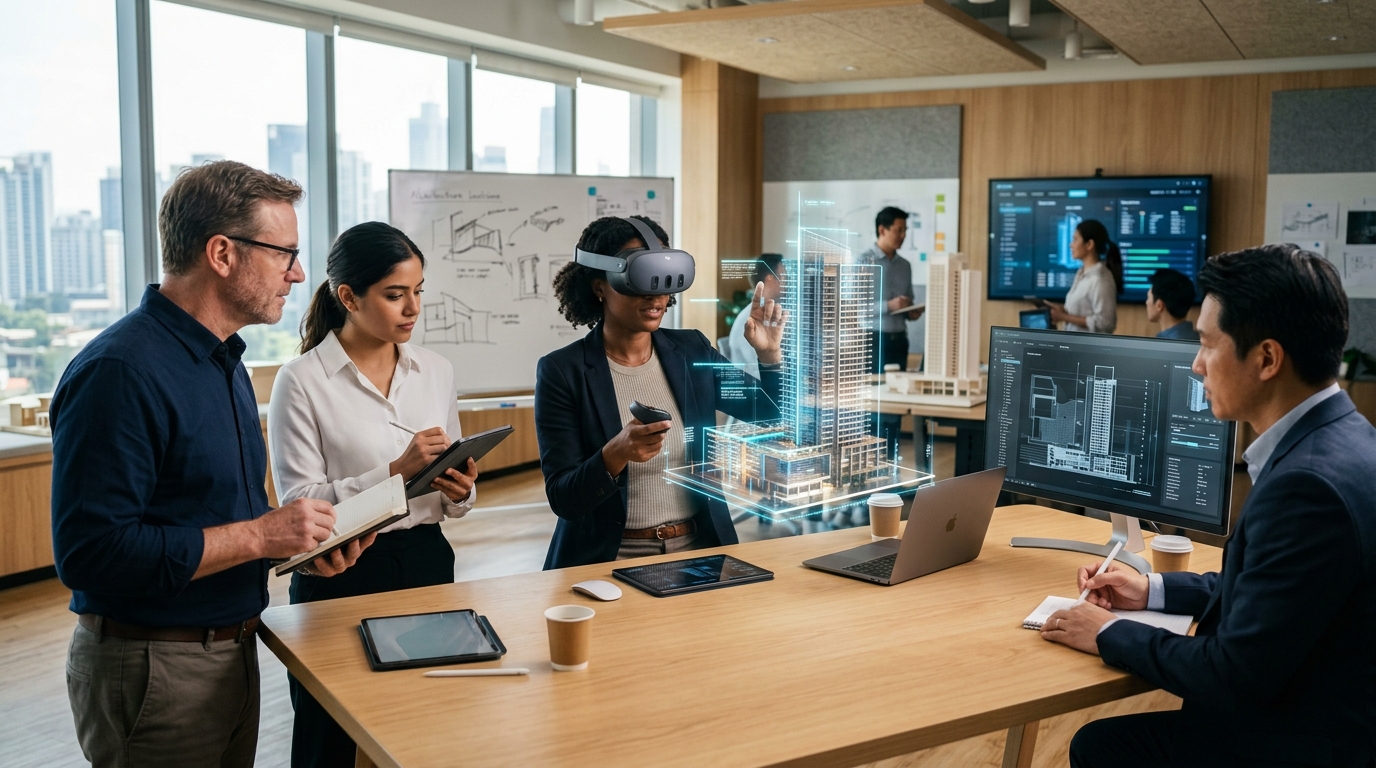
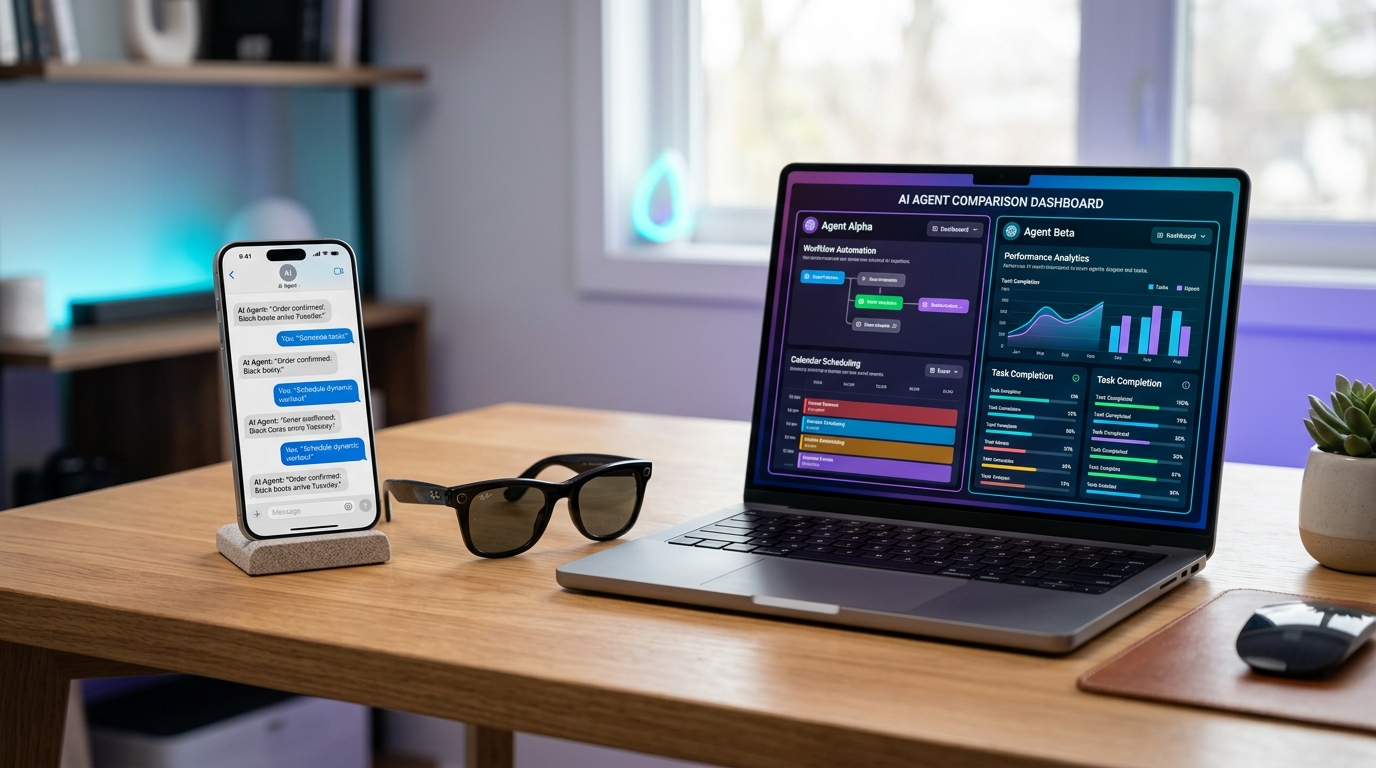
The frontier of hardware productivity in 2026 focuses on ambient computing. Audio-first smart pins and camera-equipped glasses allow knowledge workers to receive micro-summaries and query their assistants via natural speech without touching a screen. Simultaneously, enterprise spatial computing (such as Meta VR for Business) replaces claustrophobic 13-inch laptop displays with infinite multi-monitor virtual canvases and collaborative spatial design reviews.
Can Wearable AI Reduce the Time You Spend on Your Phone?
Analyzing the cognitive impact of audio-first ambient wearables: how heads-up speech assistants filter urgency from noise and reclaim deep work blocks.
Meta VR for Business: Top Advantages and Industries Using It
Investigating spatial computing in corporate operations: remote team 3D architecture reviews, virtual training simulations, and multi-display virtual offices.
Track 03: Autonomous Office Triage & Administrative Automation
Administrative overhead—coordinating calendar invites, tracking down invoice receipts, drafting routine email confirmations, and summarizing long email chains—consumes an estimated 35% of an executive's weekly cognitive bandwidth. In 2026, autonomous desktop agents represent the ultimate lever for reclaiming this lost time.
Tools like OpenAI Dots operate as ambient digital chiefs of staff. Rather than requiring users to manually prompt every action, these agents maintain persistent context across desktop operating systems, autonomously sorting inbox items by true urgency, flagging contract discrepancies, and assembling morning operational briefings before team standups.
Can OpenAI Dots Handle Your Repetitive Office Tasks?
A rigorous operational audit of OpenAI Dots in commercial office environments: testing calendar negotiation, document synthesis, and automated receipt matching against traditional administrative workflows.
Track 04: Institutional Self-Service & Scaled Knowledge Portals
As organizations grow, internal operational efficiency often degrades due to knowledge fragmentation. Employees submit hundreds of repetitive internal support tickets to HR, IT, and legal teams simply because internal documentation is scattered across disjointed intranets and wikis.
Progressive commercial organizations in 2026 are adopting architecture lessons pioneered by massive public-sector civic AI initiatives (such as America.gov). By implementing unified, grounded conversational interfaces that index all internal policies, compliance guidelines, and system manuals, companies eliminate ticket backlogs and empower employees with instant, verified self-service answers.
What Businesses Can Learn From an AI-Powered Government Portal
Translating civic AI breakthroughs to corporate operations: how high-volume public sector retrieval architectures provide a masterclass in reducing internal IT support queues and unifying siloed enterprise knowledge.
2026 Modern Productivity Archetype Comparison Matrix
Modern efficiency requires deploying the appropriate tool for specific cognitive demands. The table below compares the four primary productivity archetypes deployed across forward-thinking organizations in 2026:
| Productivity Archetype | Core Tooling | Primary Modality | Friction Reduction | Primary Strategic Benefit |
|---|---|---|---|---|
| Semantic Second Brain Personal Knowledge | Notion AI / Obsidian | Conversational Query | Information Retrieval | Eliminates lost notes, cross-pollinates historical thoughts into new projects |
| Ambient Wearable Agents Audio-First Interface | Smart Glasses / Pins | Audio / Heads-Up | Screen Disruption | Reclaims focus by delivering voice micro-summaries without unlocking phones |
| Spatial Virtual Workspaces Immersive Collaboration | Meta Quest / VisionOS | 3D Spatial Headset | Physical Constraints | Infinite multi-monitor workspaces and spatial collaborative engineering |
| Institutional Self-Service Enterprise RAG Portal | America.gov / Internal RAG | Grounded Search | Ticket Overhead | Eliminates internal HR/IT support friction through verified self-service answers |
The 5 Golden Habits of High-Leverage AI Productivity
Adopting AI tools without disciplined operating habits frequently creates chaos rather than focus. Implement these five verified protocols to sustain high cognitive leverage:
- 1. Maintain Strict Semantic Input Hygiene Your AI second brain is only as insightful as the raw material you feed it. Capture raw meeting transcripts, strategic takeaways, and decision logs daily so the vector embedding layer has rich, accurate intellectual context to synthesize.
- 2. Delegate Administrative Routing to Background Agents Never waste peak morning cognitive hours managing calendar invites or sorting newsletters. Configure desktop agents like OpenAI Dots to summarize inboxes and assemble structured morning briefs before you begin your day.
- 3. Establish Clear Boundaries for Ambient Hardware Wearable AI is designed for situational triage, not endless chatter. Set aggressive notification thresholds so your smart glasses or audio pin only interrupt you for tier-1 emergencies or high-priority calendar milestones.
- 4. Ground Team Knowledge in Unified Conversational Portals Stop answering the same procedural questions in Slack or email threads. Route team inquiries to an internal RAG knowledge portal, and continuously update the underlying source documents when policies evolve.
- 5. Conduct Quarterly Cognitive Tool Audits Every three months, audit your tool stack. Cancel subscriptions for redundant summarizers and novelty apps that fail to measurably save at least two hours per week of real focused work.
Frequently Asked Questions
Key clarifications and practical answers addressed by The Indox editorial board.
How does a second brain powered by AI differ from standard desktop search?
Standard desktop search relies on exact keyword matching. An AI second brain utilizes semantic vector embeddings to understand the meaning behind your question, synthesizing disparate notes written months apart into a cohesive, structured answer.
Can wearable AI hardware genuinely reduce screen time?
Yes, by decoupling information retrieval from visual screens. Wearables handle quick queries, voice notes, and navigation via natural audio feedback, preventing users from falling into the visual distraction traps inherent in smartphone interfaces.
What is the primary advantage of deploying VR spatial computing in business?
VR eliminates the physical boundary of desk setups, providing remote professionals with massive virtual multi-monitor layouts while enabling engineering teams to inspect full-scale 3D models and conduct lifelike collaborative workshops.