
Almost everyone has suffered through a broken automated phone menu. You call a business, a robotic voice tells you to "listen closely as our menu options have changed," and twenty minutes later you find yourself yelling "agent!" into the receiver just to talk to a human. On September 15, Google introduced Gemini 3.8 Live and Live Extended Thinking, bringing a crucial upgrade to voice AI: the ability to run software tools and check databases in the background while carrying on an uninterrupted conversation. For businesses, this finally makes automated phone calls feel like talking to a competent person rather than fighting an automated telephone tree.
The Big Breakthrough: Thinking and Working While Talking
Earlier generations of voice AI had an awkward flaw that made them sound unnatural: they could not multitask.
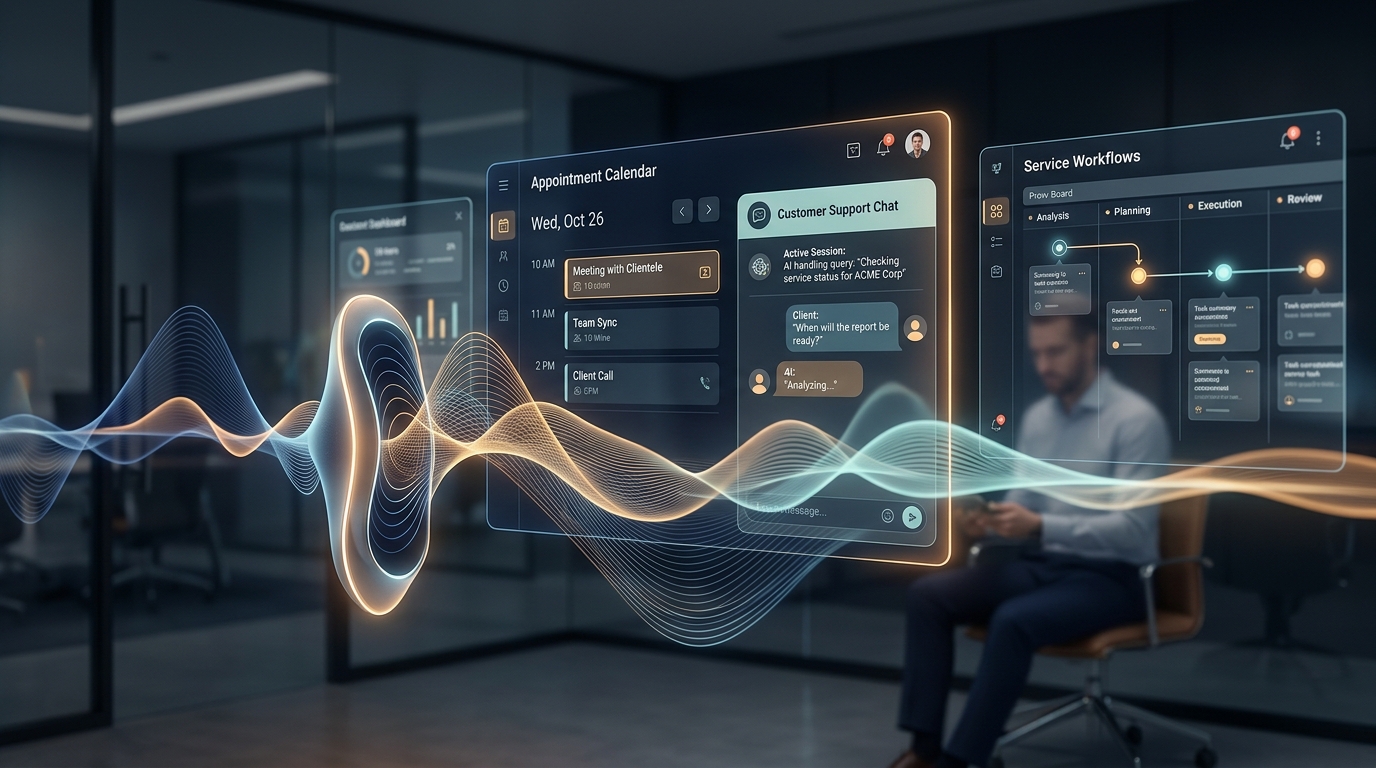
If you called a clinic and asked, "Do you have any openings with Dr. Patel this Thursday afternoon?" the voice bot had to stop talking completely. It would pause for five to eight seconds in total silence while its server queried the scheduling database. That awkward dead air instantly reminded the caller that they were talking to a slow computer program.
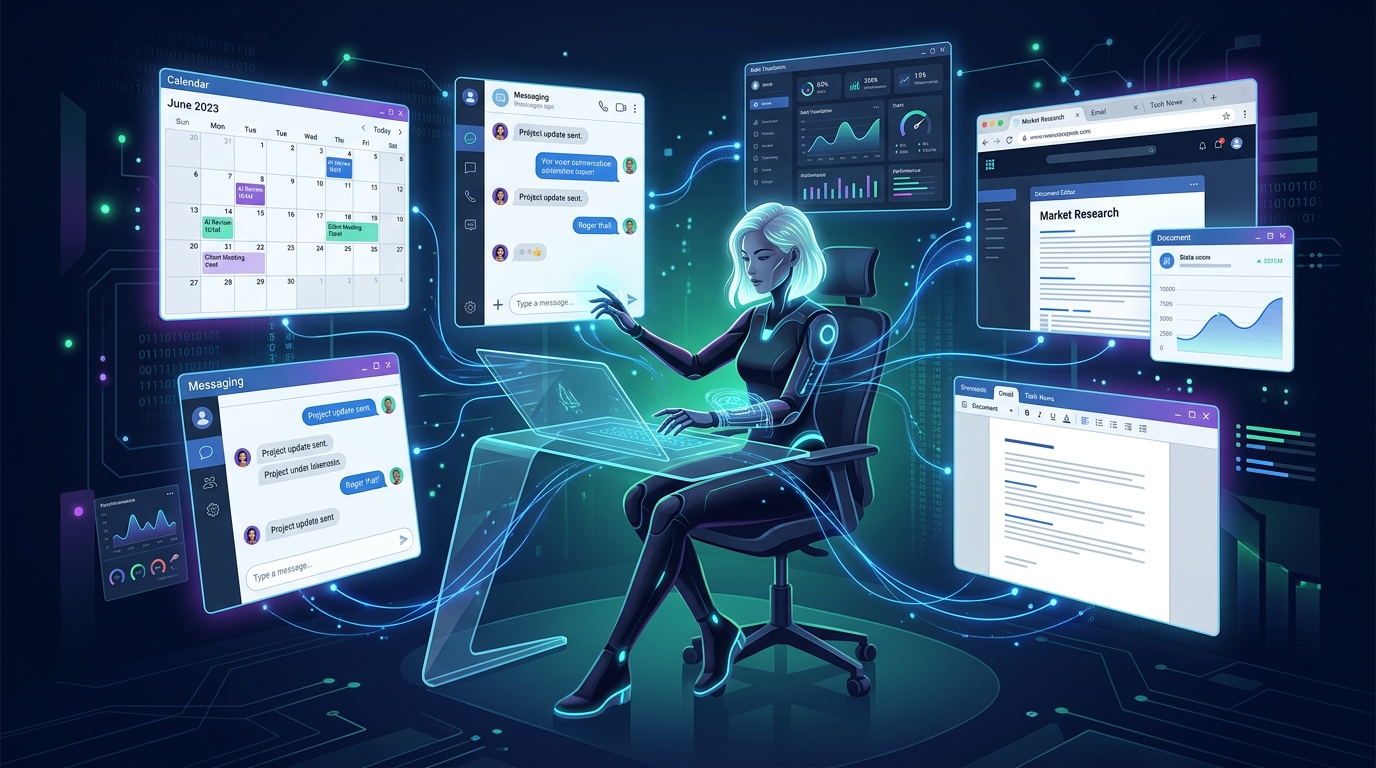
Gemini 3.8 Live fixes this through what engineers call background tool execution. The AI can now talk to you and run database queries at the exact same time. This mirrors the broader industry evolution from chatbots that simply answer questions to autonomous assistants that take action across connected software, which we explored in our deep dive on how personal AI agents execute real tasks across web apps.
While saying naturally, "Sure, let me check Dr. Patel’s calendar for Thursday afternoon right now," the model is already querying the clinic's scheduling software in the background. By the time it finishes that normal introductory sentence, the appointment data is already on screen, allowing it to seamlessly continue: "He has an open slot at 2:15 PM and another at 4:30 PM. Would either of those fit your schedule?"
| Customer Experience | Old Automated Phone Menus (IVR) | Gemini 3.8 Live Voice Agents |
|---|---|---|
| How you speak | Pressing phone dial numbers (1, 2, 9) | Normal, everyday conversational English |
| Interruption handling | Must wait for long scripted recordings to finish | Immediate; stop it mid-sentence and it listens |
| Database lookups | Awkward dead air or hold music while system searches | Background search while naturally talking |
| Complex questions | Fails and loops back to the main menu | Understands multi-part requests and accents |
| Availability | 24/7, but uniformly hated by customers | 24/7 instant answers with near-zero hold times |
Workflow 1: Hassle-Free Appointment Booking
For service businesses—such as dental clinics, veterinary practices, plumbing contractors, and salons—missed phone calls mean lost revenue. Industry surveys show that over 30% of incoming business phone calls go to voicemail because front-desk staff are busy helping in-person clients or the call comes in after 5:00 PM. Most callers simply hang up and dial the next competitor on Google.
With a live voice agent connected directly to booking software like Calendly, Acuity, or ServiceTitan, phone scheduling becomes instant. Handling routine appointment calls is a prime example of what we covered in our review of workplace automations that genuinely save time: it offloads repetitive, predictable transactions so human staff can focus on high-touch client needs without getting bogged down by phone tag.
How a real booking conversation sounds:
Caller: "Hi, my air conditioner started leaking water this morning. Do you have a technician who can come out tomorrow morning?"
Voice Agent: "I'm sorry to hear that. A leaking unit can be frustrating. Let me check our dispatch board for tomorrow morning... We have a certified tech available between 8:00 AM and 10:00 AM, or another window from 11:00 AM to 1:00 PM. Would the earlier morning slot work better for you?"
Caller: "8:00 AM is perfect. My address is 412 Maple Street."
Voice Agent: "Got it. I have you booked for tomorrow between 8:00 AM and 10:00 AM at 412 Maple Street. I just sent a text confirmation to this number with the technician's name and our arrival tracking link."
The caller didn't wait on hold. The front-desk receptionist didn't have to interrupt an in-person patient. The appointment was locked in, the database was updated, and the customer received a text receipt in under sixty seconds.
Workflow 2: Fast Answers to Everyday Customer Enquiries
A massive portion of customer service call volume consists of routine, repetitive questions:
- "Where is my order? The tracking link says delayed."
- "Do you have the 60-inch dining table in walnut in stock at your downtown showroom?"
- "What is your return policy on opened electronics?"
- "Can I bring my dog onto your outdoor patio tonight?"
Human support agents spend half their day reading static help docs to callers. A smart voice agent can instantly check real-time inventory systems (like Shopify or SAP), look up customer records by phone number, and provide accurate answers without transferring the caller across three different departments.
Workflow 3: Tier-1 Account Support and Routine Fixes
Beyond simple answers, voice agents can handle basic account maintenance securely:
- Password and Login Resets: Verifying caller identity via a quick push notification or SMS code and dispatching a secure reset link.
- Membership Holds and Cancellations: Allowing gym members or subscription customers to pause their plan for 30 days without having to fill out paper forms in person.
- Payment Receipt Lookups: Resending PDF invoices or updating an expiring credit card on file through an encrypted payment link sent to the caller's phone.
"The goal of voice AI isn’t to replace human empathy. It’s to handle the repetitive 70% of phone traffic so your human team can give their undivided attention to the customers who truly need them."
Where Human Handover Remains Absolutely Necessary
Here is the most critical lesson for any business considering voice AI: trying to automate 100% of your calls is a recipe for customer backlash.
There are clear situations where an AI must immediately step aside and transfer the caller to a human team member:
1. Angry or Emotionally Distressed Customers
If a customer’s flight was canceled, their wedding cake arrived damaged, or their water heater flooded their basement, they do not want to talk to an upbeat robot. Modern systems like Gemini 3.8 can detect elevated vocal pitch, sharp tone, and frustration words. When stress is detected, the AI should immediately say: "I hear how stressful this is, and I want to make sure this is handled right away. Let me transfer you directly to our senior resolution team."
2. Complicated Disputes and Policy Exceptions
AI is strictly bound by rules. It cannot make judgment calls on whether to waive a non-refundable $500 cancellation fee for a client experiencing a family emergency. Human staff possess empathy, discretion, and authority to bend policies when good customer relationships warrant it.
3. High-Ticket Sales and Enterprise Deals
If a caller wants to book a $100 dental cleaning, an AI agent is great. If a prospective client calls wanting to discuss a $40,000 corporate catering contract or commercial roof replacement, the AI should qualify their timeline and budget, then immediately transfer the call to an experienced sales manager.
The "Warm Transfer" Rule
Nothing infuriates a caller more than explaining their problem to an automated voice for three minutes, getting transferred to a human, and hearing the human say: "So, what can I help you with today?"
A properly configured voice pipeline performs a warm transfer: as the call rings on the human agent’s desk, their screen pops up with a clean, 3-bullet summary of the caller's issue, account number, and what was already attempted. The human can pick up and say: "Hi David, I see you were talking with our assistant about the leak on Maple Street. I’m looking at your account right now—let’s get this sorted out."
The Realistic Costs: How the Numbers Work
For a small or medium-sized business, running a live voice AI agent is remarkably cost-effective compared to staffing a 24-hour call center:
- Human Support Costs: Hiring, training, and retaining customer support reps costs roughly $22 to $35 per hour including benefits and software licenses.
- Voice AI Costs: Cloud voice inference and telephony typically run between $0.06 and $0.15 per minute of active talk time. A typical 2-minute booking call costs roughly 20 to 30 cents.
- The Hybrid Advantage: Businesses that deploy a voice agent typically see their human team’s routine call load drop by 50% to 65%, allowing existing staff to focus on complex projects and proactive client outreach without burning out.
Frequently Asked Questions
Key clarifications and practical answers addressed by The Indox editorial board.
Are businesses legally required to tell callers they are speaking with an AI?
In many jurisdictions (including California, the EU, and several other states and countries), consumer transparency laws require automated systems to disclose that they are an artificial assistant at the start of the call. Beyond legal rules, customers appreciate honesty—disclosing it upfront sets clear expectations and builds trust.
How does the voice agent handle background noise or loud environments?
Gemini 3.8 uses advanced acoustic noise suppression to filter out street noise, barking dogs, and car engine hums. If an audio stream is genuinely distorted, it politely asks the caller: "I'm having a little trouble hearing you clearly over the background noise. Could you repeat that last part?"
Do I need to replace my existing business phone numbers?
No. You keep your current business phone numbers. Telephony providers like Twilio or Vonage allow you to set up simple call-forwarding rules—for example, sending calls to the voice assistant only after-hours, on weekends, or when all human lines are busy.
The Bottom Line for Business Owners
The telephone is not going away. Despite chatbots and mobile apps, millions of customers still pick up the phone when they need an answer quickly or have an urgent problem that needs fixing.
With Google’s Gemini 3.8 Live update, the frustrating era of "Press 1 to continue waiting" is finally coming to an end. Businesses that adopt smart voice agents won't just save money on repetitive support tickets—they will win lifelong customer loyalty simply by answering the phone on the very first ring.
Master Architecture: Real-time full-duplex speech synthesis and conversational voice agents are detailed in Track 3 of our 2026 AI Tools & Autonomous Agents Guide, outlining low-latency phone triage and client support architectures.